Buying a leading aesthetic machine is only the visible expense. Clinics also pay for electricity, treatment tips, cooling, maintenance, staff training, and downtime. Small costs repeat. A device may use modest power, yet specialized consumables can shape the true cost per treatment. That difference matters when setting prices or comparing technologies.
So, How much do professional aesthetic machines cost to run? There is no single reliable figure. Operating costs in China vary by device type, treatment volume, supplier terms, city, and service coverage. A laser, radiofrequency system, and ultrasound platform have different energy needs and replacement schedules. Local sourcing may reduce delivery delays, while imported parts can affect repair timelines and budgets. Estimates should draw on written supplier specifications, utility bills, and actual consumable use—not sales claims alone.
A useful cost review separates fixed expenses from costs that rise with each treatment. It also considers installation, warranty coverage, scheduled servicing, and the machine’s expected working life. Even a careful spreadsheet can miss lost revenue when a device is unavailable. That part is easy to underestimate. This guide examines the main running costs behind popular aesthetic machines in China and explains which figures clinics should verify before investing. Where suppliers provide different assumptions, compare them carefully rather than treating one estimate as universal.
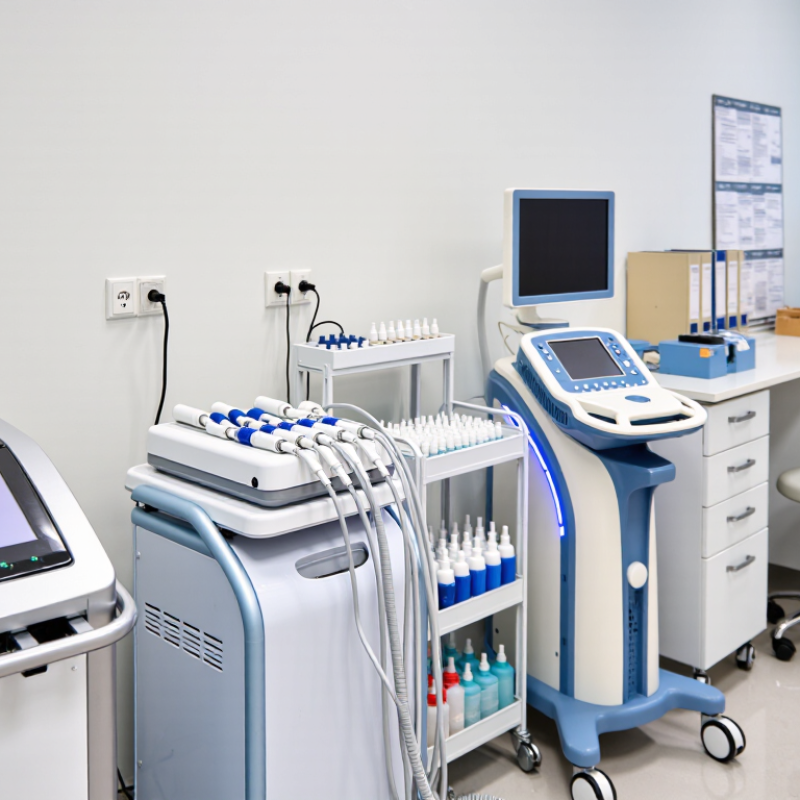
Define Operating Cost: Electricity, Consumables, Labor, Maintenance, and Downtime
A machine’s operating cost is more than its electricity bill. Track electricity, single-use supplies, staff time, scheduled servicing, repairs, and lost appointment hours separately. Use actual meter readings where possible; a nameplate rating may show peak draw, not typical use. For example, a 2 kW unit running six hours daily for 22 days uses about 264 kWh. At an assumed 0.8 yuan per kWh, that is about 211 yuan monthly. Replace the assumed tariff with your clinic’s bill rate.
Labor can outweigh power. China’s National Bureau of Statistics reported an average annual wage of 68,340 yuan for employees in urban private-sector units in 2023. This is a broad benchmark, not an aesthetic-clinic salary, and excludes employer costs. Record setup, cleaning, and treatment time to estimate labor per session. Add consumables per treatment and annual maintenance divided by expected yearly sessions. Downtime deserves its own line: estimate canceled or rescheduled slots, rather than treating every unavailable hour as lost revenue. This estimate remains imperfect; actual use varies by device, workload, and local service costs.
Tips: Review a monthly log of treatments, consumables, faults, and idle hours. Compare planned with actual costs. Small gaps matter. A forgotten cleaning interval can quietly become repair time.
Compare Laser/IPL, RF, and HIFU by Nameplate Power and Treatment Throughput
How Much Do Top Aesthetic Machines in China Cost to Run?
Compare Laser/IPL, RF, and HIFU by Nameplate Power and Treatment Throughput
Nameplate power gives a starting point, not a complete electricity bill. Laser and IPL systems may draw more during flashes and cooling. RF devices often deliver energy in shorter, controlled cycles. HIFU systems can have modest electrical demand, yet treatment time depends on the area and shot pattern. Actual specifications vary by model, so check the equipment label and operating manual.
Throughput changes the cost per appointment. A laser or IPL session may cover a broad area quickly, while detailed settings and cooling breaks can slow the room. RF appointments may be steady but require careful passes. HIFU treatments can take longer when many lines or zones are planned. Estimate electricity with input power in kilowatts × operating hours × your electricity rate. A 2 kW unit running for three hours at one currency unit per kWh would use about six currency units of electricity at full rated load. Real draw may be lower. This is an imperfect proxy.
Tips: Record meter readings during a typical clinic day, including warm-up and standby. Compare completed treatments per hour, not just the machine’s power rating. Keep room size, settings, and operator pace consistent. Small differences matter.
Calculate Energy Spend: A 1 kW Machine Uses 1 kWh per Operating Hour
How Much Do Top Aesthetic Machines in China Cost to Run?
A machine’s energy cost starts with its rated power, not its treatment price. A 1 kW machine running for one hour consumes 1 kWh. The calculation is simple: power in kilowatts × operating hours = energy used. The U.S. Energy Information Administration explains this same relationship in its electricity measurement guidance. For example, a 1.5 kW device used for four hours consumes 6 kWh. Multiply that figure by your actual electricity tariff to estimate the energy charge. A display reading is not always the whole story.
Tips: Check the nameplate and your electricity bill. If a machine is rated at 2 kW but operates for three hours daily, its maximum-use estimate is 6 kWh per day. At a tariff of ¥0.80 per kWh, that equals ¥4.80 daily, or about ¥144 over 30 days. This is an estimate, not a guaranteed bill.
Real operating patterns can differ. Heating systems may cycle, and standby time still draws some power. Keep a simple log of treatment hours and meter readings for a week. Compare the result with the rated-power estimate. It may not match perfectly. That gap is useful: it can reveal idle time, changing workloads, or assumptions worth checking before budgeting.
Estimate Cost per Treatment from Local CNY/kWh Rates and Session Time
Running cost per treatment depends on the machine’s electrical input, session length, and local electricity tariff. Check the input rating on the equipment label or technical documentation. Convert watts to kilowatts, then use this estimate: kilowatts × operating hours × CNY per kWh. A 1,500-watt unit running for 30 minutes uses about 0.75 kWh. At a local rate of 0.90 CNY/kWh, that is roughly 0.68 CNY per session. This is an estimate, not a guaranteed bill amount.
Tips: Record your actual tariff and treatment time. Include warm-up and cleaning periods when the machine remains powered. A plug-in energy meter can help reveal differences between rated input and real use, if the equipment setup allows safe measurement.
Some sessions involve pauses, cooling, or standby time, so the active treatment duration may understate total power use. Keep a simple log for several days; small variations add up across a busy clinic. Electricity is only one operating expense. This calculation excludes staff time, consumables, maintenance, and room costs. Don’t treat a neat number as a full profitability estimate.
Add Consumable Life, Annual Service, and Calibration Costs per Session
A machine’s purchase price tells only part of its operating cost. For each treatment, track the consumables actually used: cartridge shots, cooling tips, filters, or single-use accessories. Divide each item’s landed cost in China by its realistic usable life, not the maximum printed capacity. A cartridge rated for thousands of shots may be replaced earlier if output becomes inconsistent. Small details matter.
Add annual service and calibration costs, then divide them by completed sessions, not booked appointments. For example, if annual service and calibration total ¥12,000 and the device completes 600 sessions, they add ¥20 per session. If consumables average ¥85, the tracked cost is ¥105 before labor, rent, and electricity. These figures are illustrative; local parts, service travel, and workload can change them sharply.
Keep invoices, replacement dates, shot counts, and calibration records together. A simple spreadsheet is enough. Recalculate quarterly, especially after a busy season or a service visit. I would not treat the result as exact: missed shots and cancellations are easy to overlook. Use completed treatments as the denominator, and note any downtime separately. Calibration may protect consistency, but its cost should follow the actual service schedule and provider’s documentation.
How Much Do Top Aesthetic Machines in China Cost to Run? - Add Consumable Life, Annual Service, and Calibration Costs per Session
Indicative planning estimates for commonly used aesthetic equipment in China. Costs are shown in Chinese yuan (CNY) per treatment session; actual expenses vary by device configuration, supplier, workload, and service agreement.
| Equipment category |
Typical consumable and indicative life |
Consumables per session (CNY) |
Annual service / performance-check budget (CNY) |
Assumed sessions per year |
Service allocation per session (CNY) |
Estimated running cost per session (CNY) |
| Diode laser hair removal |
Treatment handpiece or diode module: commonly rated for roughly 500,000–1,000,000 pulses; life depends on operating conditions and maintenance. |
30–120 |
18,000–36,000 |
1,200 |
15–30 |
45–150 |
| IPL hair and skin treatment |
Flashlamp or lamp cartridge: often around 20,000–50,000 flashes, with replacement timing affected by energy settings and treatment volume. |
25–100 |
12,000–24,000 |
900 |
13–27 |
38–127 |
| Q-switched Nd:YAG laser |
Flashlamp and related optical parts: service life varies considerably; lamp replacement is commonly planned by pulse count and output checks rather than a fixed calendar interval. |
10–50 |
15,000–30,000 |
1,000 |
15–30 |
25–80 |
| Fractional CO₂ laser |
Patient-contact tips or protective accessories are typically replaced per treatment or according to infection-control requirements; laser tube life varies with usage and upkeep. |
80–220 |
20,000–42,000 |
700 |
29–60 |
109–280 |
| RF microneedling |
Sterile single-use needle cartridge: generally one cartridge per patient treatment; cost depends on needle type and treatment area. |
300–800 |
18,000–36,000 |
900 |
20–40 |
320–840 |
| Microfocused ultrasound (HIFU) |
Treatment cartridge: often rated for approximately 10,000–20,000 lines or shots, depending on cartridge type and treatment protocol. |
180–650 |
20,000–40,000 |
800 |
25–50 |
205–700 |
Notes: Service allocation is the annual service and performance-check budget divided by assumed annual treatment volume. Consumable estimates include routine treatment-related replacement items or usage-based component wear, as applicable. Totals exclude staff time, rent, financing, taxes, patient-care products, major repairs, and revenue lost during downtime. These are illustrative budgeting ranges, not supplier quotations; confirm actual consumable specifications, replacement intervals, and service requirements for the equipment being considered.
Conclusion
How much do professional aesthetic machines cost to run depends on more than electricity. A complete operating-cost estimate should include power, consumables, staff time, routine maintenance, calibration, and downtime. Laser and IPL systems, radio-frequency machines, and HIFU devices can differ in nameplate power and treatment throughput, so compare both their energy use and the number of sessions they can deliver in a working hour.
A simple energy estimate is that a 1 kW machine uses 1 kWh for each operating hour. Multiply that figure by the local CNY-per-kWh rate and the machine’s operating time per session to estimate electricity cost per treatment. Then add the session’s share of consumables, annual servicing, and calibration, along with labor and any expected downtime. This per-session view makes it easier to compare equipment and plan realistic operating budgets.

 NexAffair Medical