Choosing the best cooling gel for laser treatments requires more than comparing product labels. Skin type, laser wavelength, treatment depth, and clinic protocol all influence comfort and safety. The phrase “best” is incomplete. A gel that feels soothing on one patient’s cheek may feel sticky or irritating on another’s sensitive jawline.
Why use a cooling gel with laser treatments? Cooling gel can support surface comfort, improve the glide of certain treatment devices, and help clinicians observe the treatment area more clearly. However, it should not be treated as a guaranteed shield against burns, pigment changes, or post-treatment sensitivity. The American Society for Dermatologic Surgery’s 2023 Consumer Survey shows continued public interest in non-surgical skin procedures, including laser-based treatments. That demand makes product selection and professional supervision increasingly important.
The U.S. Food and Drug Administration emphasizes appropriate device use, operator training, and risk communication for medical lasers. Professional guidance also supports careful screening, patch testing when appropriate, and proper aftercare. Ingredients matter. Fragrance, alcohol, preservatives, and cooling agents may affect reactive skin. Some gels also dry too quickly under warm treatment-room lights. That detail is easy to miss. This 2026 guide examines cooling performance, skin compatibility, conductivity, packaging hygiene, and clinical usability. It also questions whether cooling gel is necessary for every laser procedure. A reliable choice should match the device, the patient, and the practitioner’s documented protocol—not merely promise instant comfort.
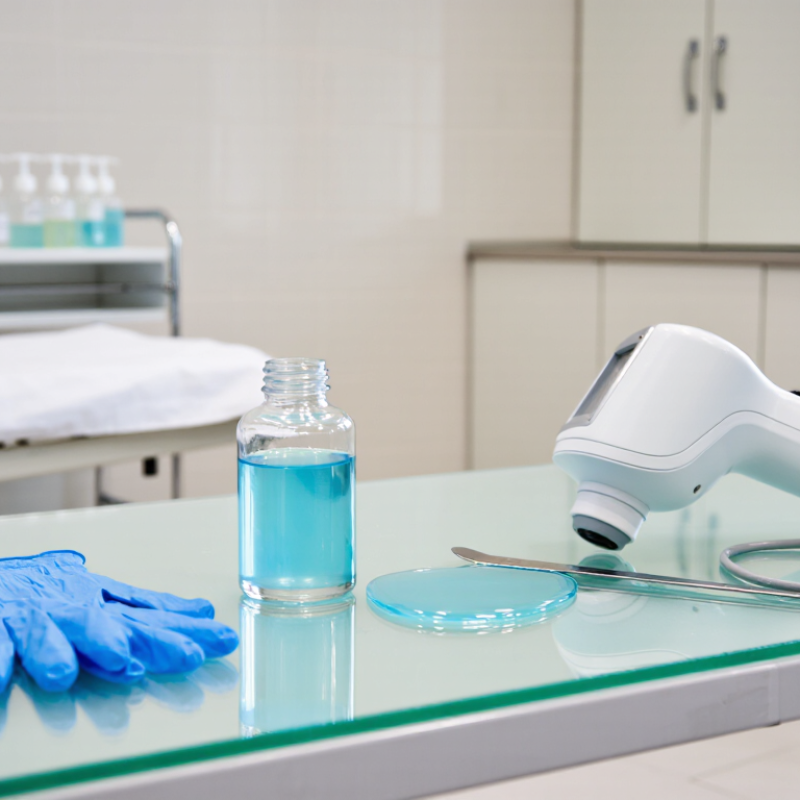
What Is Cooling Gel for Laser Treatments?
Cooling gel is a water-based layer placed between the skin and a laser handpiece. It helps transfer heat away from the surface. It can also improve contact and reduce friction during treatment. Some formulas contain soothing ingredients, but cooling gel is not automatically a numbing product.
Its purpose depends on the laser system. The U.S. Food and Drug Administration requires medical lasers to follow performance and safety standards under 21 CFR 1040.10. A 2024 ISAPS Global Survey reported more than 1.6 million laser hair-removal procedures worldwide. This volume highlights why consistent skin cooling matters. A review in Lasers in Medical Science also described contact cooling as a useful method for limiting epidermal heat during selected procedures. Results still vary with wavelength, pulse duration, skin tone, and technique.
Tips: Check the treatment instructions before applying gel. Some lasers require a clean, dry surface. Others use gel for better glide or cooling. Use only a sterile or professionally approved formula. Avoid products with fragrance, alcohol, or unknown active ingredients. Watch for unusual burning, swelling, or persistent redness. Cooling can reduce discomfort, but it cannot correct excessive laser energy. I have seen people trust the gel too much. That is a mistake worth reconsidering.
| Data Dimension | Practical Information | Why It Matters During Laser Treatment |
|---|---|---|
| Definition | A water-based topical gel applied to the skin before or during selected laser procedures. | It can provide a temporary cooling and cushioning layer while the clinician works on the treatment area. |
| Primary purpose | To help reduce surface heat, friction, and temporary discomfort when the treatment protocol allows its use. | Lower surface temperature may improve patient comfort, but it does not replace the laser device’s built-in cooling system or clinical technique. |
| Typical composition | Mostly purified water combined with a gel-forming agent, humectant, preservative, and sometimes soothing ingredients. | A clear, water-based formula is generally easier to spread and remove than an oil-based product. |
| Common gel types | Clear ultrasound-style gel, sterile procedural gel, and cooling gel formulated for cosmetic or dermatologic use. | The correct type depends on the laser, treatment area, skin condition, and the practitioner’s protocol. |
| Best texture | Smooth, non-gritty, easy to spread, and sufficiently viscous to remain in place without excessive dripping. | A consistent layer supports even contact and reduces the need for repeated application. |
| Transparency | Clear or nearly clear formulations are commonly preferred for procedures requiring visual access to the skin. | The clinician can better observe skin color, treatment markings, and the treated area. |
| Cooling sensation | Cooling may result from water evaporation, refrigerated storage when appropriate, or approved cooling ingredients. | Cooling can make the procedure feel more comfortable, but a strong tingling or burning sensation is not expected. |
| Suitable laser applications | May be used with selected hair-removal, vascular, pigment, tattoo, or resurfacing protocols when directed by a qualified professional. | Not every laser treatment is compatible with topical gel; the device instructions and clinician’s protocol take priority. |
| Sterility requirement | A sterile, single-use product is generally preferred for broken skin, invasive procedures, or areas at higher risk of contamination. | Sterile packaging helps reduce contamination risk. A non-sterile cosmetic gel should not be used on open or damaged skin. |
| Skin compatibility | Look for a fragrance-free, low-irritant formula and review the ingredient list before use. | This is especially important for sensitive skin or skin recently exposed to heat, light, or exfoliating products. |
| Conductivity | Water-based gels are commonly electrically conductive and are often used for ultrasound or similar applications. | Electrical conductivity does not automatically mean the gel is suitable for every laser; laser compatibility must be confirmed separately. |
| Application layer | Apply a thin, even layer only when specified by the treatment protocol. | An excessively thick layer may interfere with visibility, handpiece contact, or delivery of energy. |
| Storage | Store according to the product label, away from excessive heat and direct sunlight. Do not freeze unless specifically permitted. | Incorrect storage can change viscosity, stability, packaging integrity, and product performance. |
| Hygiene practice | Use clean application tools, avoid touching the container opening, and discard contaminated or expired product. | Good hygiene reduces the chance of transferring microorganisms to treated skin. |
| When to avoid use | Avoid use over known ingredient allergies, active skin infections, untreated open wounds, or when the laser manufacturer prohibits gel. | Using an unsuitable product may increase irritation or interfere with the treatment process. |
| Patch testing | A small-area test may be considered for people with sensitive skin or a history of contact reactions. | Patch testing can help identify obvious local irritation before treating a larger area, but it cannot predict every reaction. |
| Main selection criteria | Confirmed laser compatibility, appropriate sterility, clear texture, suitable viscosity, low-irritant ingredients, and reliable packaging. | These factors are more important than the gel’s color, scent, or marketing claims. |
| Clinical supervision | Laser treatments should be performed or supervised by a qualified practitioner following the device instructions. | The practitioner determines whether cooling gel is appropriate and how it should be applied for the specific procedure. |
Important: Cooling gel is a support product, not a substitute for appropriate laser settings, protective eyewear, skin assessment, or professional medical guidance. Always follow the laser device instructions and the treating practitioner’s protocol.
It forms a water-based layer between the skin and laser handpiece. It helps move surface heat away and reduces friction during movement.
No. It may reduce warmth, snapping, or stinging. It is not automatically a numbing product. Some discomfort may remain.
No. Some systems require a clean, dry surface. Others use gel for cooling or smoother contact. Follow the treatment instructions.
Use a sterile or professionally approved formula. Avoid fragrance, alcohol, and unknown active ingredients. Simple choices are often safer.
No. It cannot correct excessive energy or poor technique. Proper settings, protective eyewear, and trained clinical judgment remain essential.
It may support temporary redness control and reduce dryness. The treated area may still react later, especially near the cheeks or upper lip.
Promptly report unusual burning, blistering, major swelling, or persistent redness. A cool compress may help mild discomfort. Do not ignore worsening symptoms.
Not always. Excess gel can interfere with the intended surface contact. The correct amount depends on the laser system and treatment area. More is not automatically safer.
Cooling can improve comfort, but it does not guarantee protection. I once assumed cooler skin meant safer treatment. That assumption needs reconsidering.
Cooling gel for laser treatments is a specially formulated topical layer designed to cool the skin, reduce discomfort, and support a safer treatment experience. Why use a cooling gel with laser treatments? Laser energy can create heat in the skin, which may lead to temporary redness, warmth, swelling, or sensitivity. A suitable gel helps absorb and disperse excess heat while providing soothing hydration and a protective barrier. It can also improve comfort during procedures and help calm the skin afterward.
When choosing the best cooling gel in 2026, consider its cooling performance, gentle ingredients, skin compatibility, texture, and suitability for the specific laser procedure. Avoid products containing unnecessary irritants, fragrances, or ingredients that may increase sensitivity. Apply a clean, even layer as directed by a qualified professional, and follow recommended contact and removal times. After treatment, keep the area clean, avoid excessive heat and sun exposure, moisturize gently, and monitor the skin for unusual reactions. Always follow professional aftercare guidance for the safest recovery.

 NexAffair Medical